Summary: In today’s fast-moving digital culture, brands are tempted to chase every meme or viral trend. But long-term brand relevance depends on cultural fluency, not speed. Here’s why understanding deeper cultural signals outperforms reactive marketing.
Why brands fail at meme marketing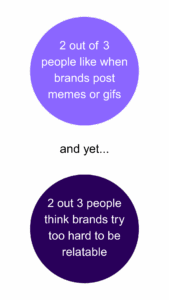
Social media moves fast. One day, it’s a Timothée Chalamet lookalike contest. The next, it’s an “I’m a mommy” meme. Brands feel pressure to jump in. But reacting to every trend comes with a cost:
- It can dilute your brand identity
- It risks sounding inauthentic
- It often fails to build long-term relevance
The data behind the risk:
- 64% of global consumers enjoy meme-led content from brands
- Yet over two-thirds say brands trying to be ‘one of us’ often feel fake
Key insight: Being in the conversation is not the same as being culturally credible.
Case study:
1. The coldplaygate
Recently, a couple’s awkward reaction after being caught on the kiss cam at a Coldplay concert became the internet’s latest obsession. The moment exploded across social media with countless brands jumping on the bandwagon.
The online tone has largely been light-hearted, but not everyone’s laughing. Some have pointed out the real-world impact this spectacle could have on the families involved – especially the children – whonow face global humiliation over a deeply personal moment.
Others have highlighted how the incident reflects deeper issues: the reach of surveillance culture, the erosion of privacy, and the internet’s appetite for public shaming in the name of entertainment.
The question is: in a week’s time, how will we view the brands who jumped in for the laughs without pausing to read the room?

2. Bumble vs. Feeld


When Bumble launched a campaign mocking celibacy, it missed the cultural moment. Many users are rethinking dating due to burnout, safety, and personal values. The tone felt dismissive. Feeld, a smaller competitor, responded with cultural fluency. It added ‘celibacy’ as a desire option. Showing it was listening. No gimmicks. Just meaningful action based on user sentiment.
Lesson? You don’t need to be loud. You need to be aligned.
Trend or signal? Understanding the difference
Memes are fleeting. But they often reflect long-term cultural shifts.
Example: Diet Coke. Once linked with 2000s office culture, Diet Coke is now rising among Gen Z. It’s been called the trendiest drink of 2025 by Cosmopolitan. This isn’t just nostalgia, it’s tied to:
- Comfort-seeking
- Rejection of wellness extremes
- New identity rituals
What it shows: Cultural signals matter more than surface-level trends.
The power of cultural fluency
Cultural fluency means:
- Reading the room (across markets, subcultures, and demographics)
- Knowing when to speak and when not to
- Acting with intention, not just reacting
It’s not about speed. It’s about strategic relevance.
Our solution: Collision by Foresight Factory
Our dynamic trends intelligence platform tracks long-term shifts in behavior, mindset, and priorities. We help brands:
- Decode emerging movements
- Act on global cultural trends
- Align with momentum — not just moments
Whether you’re operating in one market or globally, we help you move with purpose. In a world obsessed with immediacy, depth sets brands apart. The leaders of tomorrow won’t just follow virality. They’ll understand what those ‘meme moments’ mean and how to act on them for lasting impact.