Snacking in 2026 is shifting from convenience-driven consumption to functional, emotional and experiential eating. For food and beverage brands, the opportunity lies in understanding how changing consumer behaviors are reshaping demand, indulgence and growth opportunities.
Snacking in 2026 is moving from the margins of eating to the center of daily consumption habits. Having largely overcome their reputation as junk food, snacks are booming due to the cost-of-living crisis, appetite-suppressant drugs such as Ozempic and an increased desire for health optimization. Another driver is the growing prominence of “little treat culture”, whereby people are turning to smaller luxuries across categories to elevate their moods and regain a sense of control amid economic and geopolitical uncertainty.
Consumer expectations of snacks are changing too: they still need to deliver enjoyment, but they are also being asked to support energy, satiety, emotional reward and discovery. For food and beverage brands, the opportunity is to act on these emerging consumer trends as snacking becomes more central to food culture.
Brands that understand these changing consumer behaviors around food and beverage consumption will be better placed to build relevance, justify purchase and identify new routes to growth. Here we explore 3 of the 7 consumer behaviors that define snacking in 2026. The full article is available on Collision, our dynamic intelligence platform at the heart of the Foresight Ecosystem by Foresight Factory. Get in touch to learn how your team can access the complete analysis.
Highlights
- Demand for functional nutrition fuels better-for-you snacks. Consumers in 2026 are increasingly turning to snacks not just for convenience, but to actively support health goals such as satiety, energy, digestion and protein intake.
- Snacking is becoming a tool for emotional self-reward. As “little treat culture” grows, snacks are becoming an accessible, low-cost way for consumers to regulate mood, create moments of calm and justify everyday indulgence.
- Snacking is becoming more experiential and novel. Consumers increasingly expect snacks to deliver more than taste alone, using novelty and sensory pleasure to turn everyday eating into a moment of discovery.
1. Consumer demand for functional nutrition fuels better-for-you snacks
Snacking in 2026 is deeply tied to health goals. Healthy eating is no longer about restricting snacking; instead, consumers are seeking out snacks that actively support energy, fitness goals, digestion and satiety. Our own data shows that daily snackers are more likely than less frequent snackers to consume foods that have specific health benefits (source: Foresight Factory, 2025).
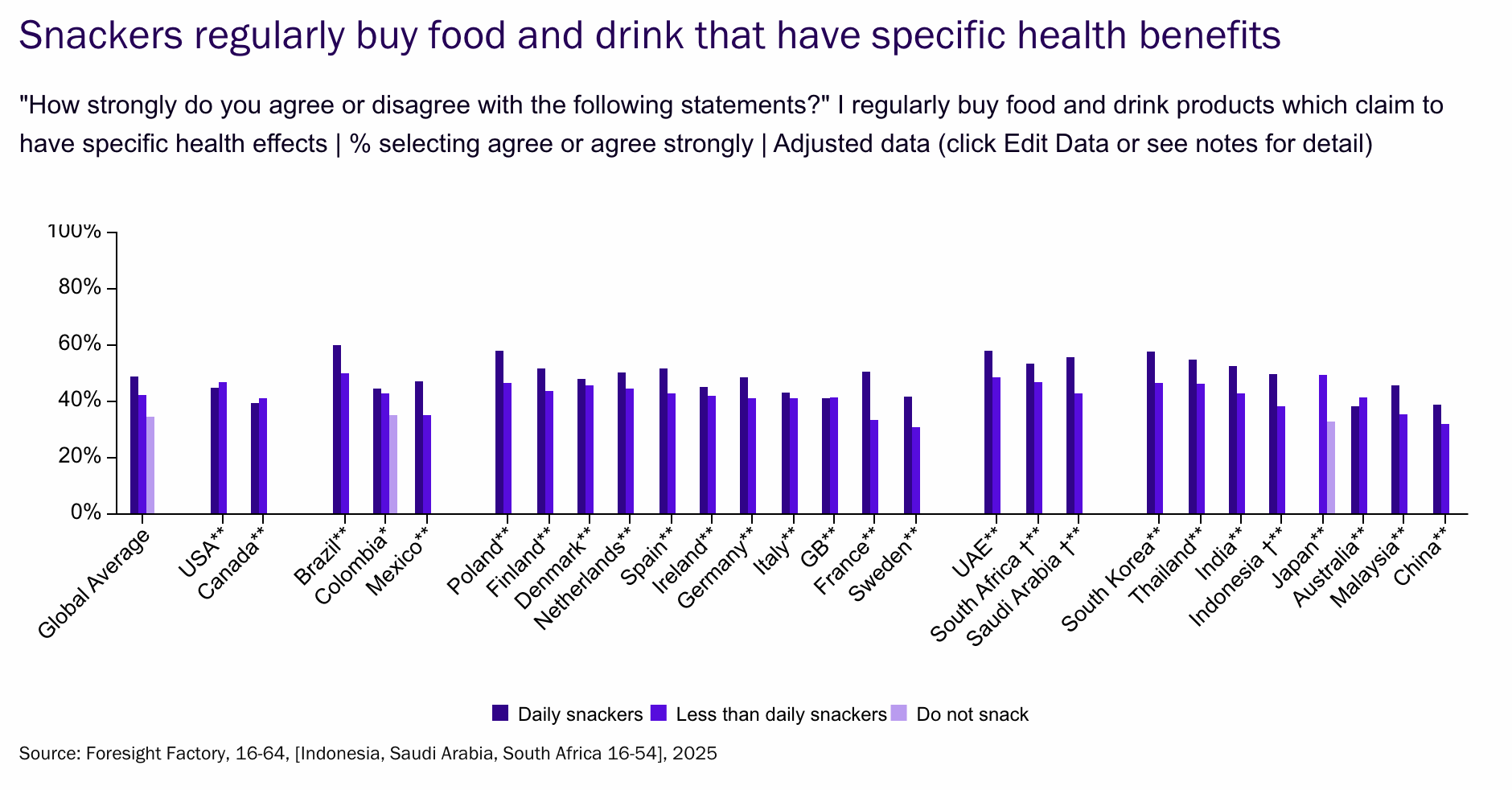
Snacks are becoming tools for nutritional optimization. Protein-filled, fiber-rich and nutrient-dense snacks are gaining momentum in 2026. While the fashionable nutrient of the moment may vary over time, the key consumer motivation to watch here is the desire for more targeted ingredients to fulfil specific health goals.
Food for thought: What are consumers looking for in healthy snacks?
Personalized health goals will increase demand for snacks that cater to specific nutritional needs. Products like meat sticks, nuts, seeds and probiotic-enhanced snacks will proliferate, and verified wellness claims such as “grass-fed” and “gut health” will resonate with shoppers. At the same time, more old and traditional recipes from around the world will appear on supermarket shelves as their wellness-boosting properties become more widely recognized.
Brand example:
Pepsi’s Prebiotic Cola, which is positioned as fiber-rich, is an example of how brands can bridge indulgence and wellness, introducing gut-health functionality into familiar formats rather than confining it to niche health products.
How to activate this emerging consumer trend:
Build clearer functional benefits into snacks. Embed functional ingredients into recognizable products that consumers trust, without over-engineering them for the sake of market relevance. Ensure your product truly delivers on functional needs, and communicate those benefits in a clear and straightforward manner, avoiding confusing technical language.
2. Snacking is a tool for emotional self-reward
Consumers in 2026 are treating snacking as a form of self-care. For many snackers, an indulgent snack is a well-deserved treat at the end of a long day, embodying “little treat culture”.
Snacks are being used to lower stress and manage emotions. It’s interesting to note that daily snackers are more likely than non-snackers to track their mood using a smartphone or other device (source: Foresight Factory, 2025). And demand for mood-regulating foods is growing. Consumers are no longer just looking for snacks that taste good – they want products that evoke a fuller emotional response, tapping into feelings such as happiness, calm, anticipation and excitement.

Food for thought: How is “little treat culture” changing consumer snacking behaviors?
Consumers will increasingly reject binary choices between healthy and enjoyable and instead favor snacks that lean into the healthy indulgence format. The continued focus on mental wellbeing means that mood-boosting snacks will maintain momentum, and many consumers will personalize their snacks based on their emotional state at that particular moment.
Brand example:
Hue’s bite-sized mood snacks deliver on this front: they are powered by science-backed ingredients that make them “energizing”, “calming”, “uplifting” or “fulfilling”. They come in three multi-sensory formats (“chew”, “burst”, “pop”).
How to activate this emerging consumer trend:
Create rituals around food and drink. As consumers forgo traditional mealtimes, consider how your brand can bring focused self-care moments into everyday life via snacks. Think beyond the product itself to the ritual, timing and mood it can support – for instance, products that tackle the afternoon slump or have sleep-inducing properties.
3. Snacking becomes more experiential and novel
Consumers expect an experiential payoff when they treat themselves to snacks. For many, snacks are a source of stimulation, delight and discovery – a meaningful dopamine hit to be enjoyed throughout the day. Limited editions, surprising formats, or products that evoke nostalgia and familiarity all deliver on this front. “Supermarket tourism” or “grocery store tourism” is an embodiment of the desire for experience delivered via treats.
Technology is expanding what indulgence can look and feel like. There are opportunities for brands to turn snacking into something interactive, immersive and multi-sensory. For instance, technology can be used not just to accentuate flavor but also to leverage other senses such as sound, touch and taste to offer an enhanced experience.
Food for thought: What will experiential snacking look like in the future?
As consumers look for affordable ways to inject fun, novelty and sensory stimulation into everyday life, more brands will experiment with limited editions, interactive packaging, culturally rooted flavor discovery and products that emphasize texture and ritual. New technological developments will facilitate the quest for enhanced indulgence, and the snack aisle will become a stronger space for emotional and cultural expression.
Brand example:
Lollipop Star, which was unveiled at the 2026 Consumer Electronics Show, is a disposable lollipop that transmits music through bone conduction technology, sending vibrations through the teeth and jaw to the inner ear. The lollipops, which cost around $9 each, are linked to exclusive tracks from artists like Akon, Ice Spice and Armani White. This turns a disposable sweet into a collectible, sensory experience.
How to activate this emerging consumer trend:
Build an experience around your product. Consider how packaging, collectability, interactivity or social shareability can make the snack feel more distinctive. In a crowded category, experience can be a powerful way to drive trial, memorability and cultural relevance.
Spot growth opportunities before the market does
As the future of food fragments into functional, emotional and experiential moments, the challenge is knowing which opportunities are building momentum and which spaces are already crowded.
Our Dynamic Opportunity Risk and Sizing approach helps food and beverage brands track emerging signals by maturity, velocity and commercial relevance, so you can prioritize when to act and where to invest. Speak to us about sizing your next opportunity and unlocking what’s most relevant to your brand.
At Foresight Factory, we help brands understand emerging consumer trends, changing food behaviors and future growth opportunities through dynamic foresight intelligence and strategic forecasting.